When considering the best options for a House Water Heater, efficiency is key. Experts in the field, like Dr. Emily Carter, emphasize, "Choosing the right water heater can significantly affect energy consumption." This highlights the importance of making informed choices.
House Water Heaters come in various types, including tankless, solar, and conventional models. Each has its strengths and drawbacks. Tankless heaters provide on-demand hot water but may require higher initial costs. Conventional heaters can be affordable but consume more energy over time.
Homeowners often overlook maintenance needs, impacting efficiency. Regular checks can prevent inefficiencies. It's easy to assume any water heater will suffice. However, selecting one that fits your home’s needs is vital for optimal performance and savings. Choosing wisely can not only enhance comfort but also lower energy bills.
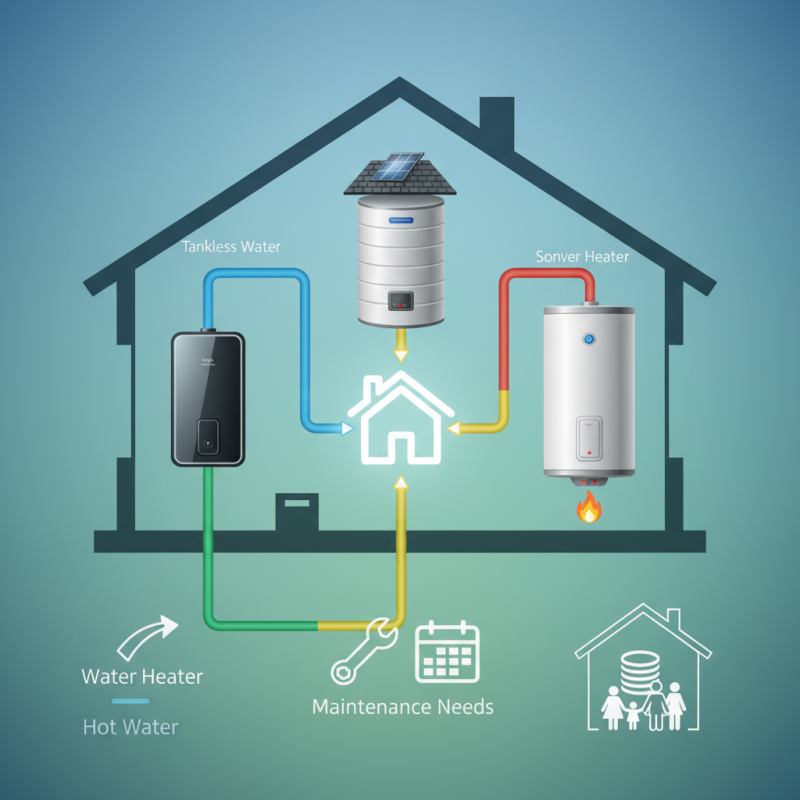
When considering the best house water heater options, it's crucial to understand different types and technologies available. Traditional tank water heaters store hot water in a large tank. They provide a steady supply but can run out of hot water quickly. These systems are simple and often more affordable initially. However, they may not be the most efficient choice for every household.
On-demand or tankless water heaters are gaining popularity. They heat water directly as needed, which can save energy. These systems can be more expensive upfront but often lead to lower utility bills over time. They are compact, making them a great option for smaller homes. Yet, it’s important to understand the flow rate and demand before installation.
Heat pump water heaters provide another option. They use electricity to move heat instead of generating it. This method can be very energy-efficient, but performance depends on the ambient temperature. It's vital to assess your climate and home size. Each type has unique features and drawbacks. What works best requires thoughtful consideration.
| Type | Energy Source | Efficiency Rating (EF) | Capacity (Gallons) | Typical Lifespan (Years) |
|---|---|---|---|---|
| Tank Water Heater | Electric/Natural Gas | 0.5 - 0.75 | 30 - 50 | 10 - 15 |
| Tankless Water Heater | Electric/Natural Gas | 0.8 - 0.95 | On-demand | 20+ |
| Heat Pump Water Heater | Electric | 2.0 - 3.0 | 40 - 80 | 10 - 15 |
| Solar Water Heater | Solar Energy | > 2.0 | 50 - 80 | 20+ |
| Condensing Water Heater | Natural Gas | 0.9 - 0.96 | 30 - 50 | 10 - 15 |
When evaluating energy efficiency ratings for water heaters, it’s essential to consider various factors. The most common ratings include UEF (Uniform Energy Factor) and EF (Energy Factor). These ratings indicate how effective a model is in converting energy into hot water. Higher efficiency ratings often translate to lower energy bills.
Tips: Regular maintenance can enhance efficiency. Flush the tank periodically to remove sediment build-up. Check the insulation around the heater to minimize heat loss.
Comparing different water heater options helps identify the right choice. Look for models with advanced features like smart thermostats. These can adjust heating patterns based on usage, saving energy throughout the day. It’s crucial to assess your specific needs. A larger household may require a different system than a single resident.
Tips: Think about the recovery rate of water heaters. This defines how quickly they can heat water after depletion. Each home has different needs, so finding the perfect match can take time. Consider both the upfront cost and long-term savings for better decision-making.
When choosing a tank water heater, it's essential to weigh the pros and cons. These heaters are typically less expensive to install. They offer a straightforward design that many homeowners find familiar. However, they take up more space and have a limited supply of hot water. This means you have to wait for the tank to refill after heavy use.
Performance metrics can vary significantly between models. Consider the first-hour rating, which indicates how much hot water can be produced during peak demand. For larger families, this rating is crucial. Energy efficiency is another key factor; look for units that offer lower standby heat loss. Keep in mind that some models may not perform as expected, leading to long showers turning lukewarm. It’s often beneficial to read user reviews and consult professionals before making a decision. Many people overlook these details and regret their choices later.
Installation and maintenance can also pose challenges. Tank water heaters require regular flushing to prevent sediment build-up. This maintenance is often neglected. Over time, this can impact performance and efficiency. Be prepared to invest time and effort to keep your heater functioning optimally. Overall, while tank water heaters can be a solid choice, careful consideration and research are vital for long-term satisfaction.
When considering tankless water heaters, it's crucial to understand their benefits and potential drawbacks. Research indicates that tankless systems can be up to 34% more energy-efficient than traditional tank heaters. They heat water on demand, meaning there’s no energy wasted in keeping a large tank warm. According to the U.S. Department of Energy, homeowners could save between $100 and $300 annually by switching to tankless models. This efficiency can significantly reduce utility bills over time.
However, installation can be more complex. Tankless units require adequate gas line capacity or electrical upgrades, which may increase upfront costs. Also, while they provide continuous hot water, their flow rate can vary. In busy households, simultaneous usage might exceed capacity. Some users report frustration over competing demands, highlighting the need for a careful evaluation of household hot water needs before purchasing. It might be beneficial to consult with a professional installer to assess your home's requirements accurately.
Further, the lifespan of tankless units is notably longer, averaging 20 years, compared to the 10-15 years of traditional heaters. Yet, they can have higher repair costs once out of warranty. Homeowners should weigh these aspects thoroughly. The investment in a tankless system should align with long-term water heating needs and maintenance capabilities.
When considering the cost analysis of electric versus gas water heaters, several factors come into play. A report from the U.S. Department of Energy indicates that electric water heaters generally have lower initial costs, averaging around $400 to $900. In contrast, gas units can range from $600 to $1,200. However, installation costs for gas heaters tend to be higher due to the need for venting and potential gas line extensions.
Operating costs reveal a different narrative. The same report highlights that gas water heaters usually offer lower energy costs. Homeowners can save up to 20% in energy expenses annually with gas compared to electric models. Given that natural gas prices are generally stable, this becomes a key consideration for many. Additionally, electric heaters typically have higher electricity rates, leading to increased ongoing costs.
Notably, efficiency ratings vary between models. Electric heaters often achieve higher efficiency, sometimes exceeding 90%. Conversely, gas heaters average around 60% to 70%. Despite this, water heating represents a significant portion of home energy expenditure. Homeowners must weigh short-term savings against long-term expenses when making a decision. This is a nuanced choice, reflecting both immediate needs and future budgetary impacts.
: The most common ratings are UEF (Uniform Energy Factor) and EF (Energy Factor). They show energy conversion effectiveness.
Regular maintenance is key. Flush the tank to remove sediment. Check insulation to minimize heat loss.
Look for features like smart thermostats and recovery rates. Assess your household’s hot water needs before deciding.
They are inexpensive to install and familiar. However, they need more space and can have limited hot water supply.
It shows how much hot water can be produced during peak demand. Larger families often require higher ratings.
Electric units have lower initial costs, but gas models often save more on energy bills over time.
Electric heaters can exceed 90% efficiency. Gas models typically range from 60% to 70%.
Regular flushing is important to prevent sediment build-up. Neglecting this can impact efficiency and performance.
Gas heaters may have higher installation costs due to venting needs. This can affect your overall budget.
Weigh short-term savings against long-term energy costs. This must align with your specific needs and budget.
When it comes to choosing the best house water heater, homeowners have a variety of options that cater to different needs and preferences. The article provides an overview of the various types and technologies available, highlighting the unique characteristics of tank and tankless water heaters. A thorough comparative analysis of energy efficiency ratings is included, helping consumers understand how to evaluate performance metrics effectively.
Moreover, the article delves into the advantages and drawbacks of traditional tank water heaters versus the benefits of tankless models, including installation considerations. Lastly, it offers a cost analysis comparing electric and gas water heaters, enabling homeowners to make informed decisions that align with their budget and efficiency goals. By understanding these factors, individuals can effectively select the most suitable house water heater for their homes.

Huayida